
Caught Between Cultures
Thomas Pegan and Natick's Praying Indians

Rising a mere 410 feet on the Natick-Dover line, Pegan Hill isn't an especially imposing presence on the local landscape, but thanks to generous stewardship in both towns, it remains that lovely combination of woodlands and fields that once characterized so much of this area. The stone walls remind us that the land was all open pasture in the 19th Century, and it’s said that the ships in Boston Harbor could be seen from the summit. To walk here thoughtfully is to step into layered time - the land at the bottom of the north slope has been farmed continuously since 1651. If we slow down enough and let go of the idea that history announces itself, we can begin to sense those layers and understand why this unassuming little hill matters.
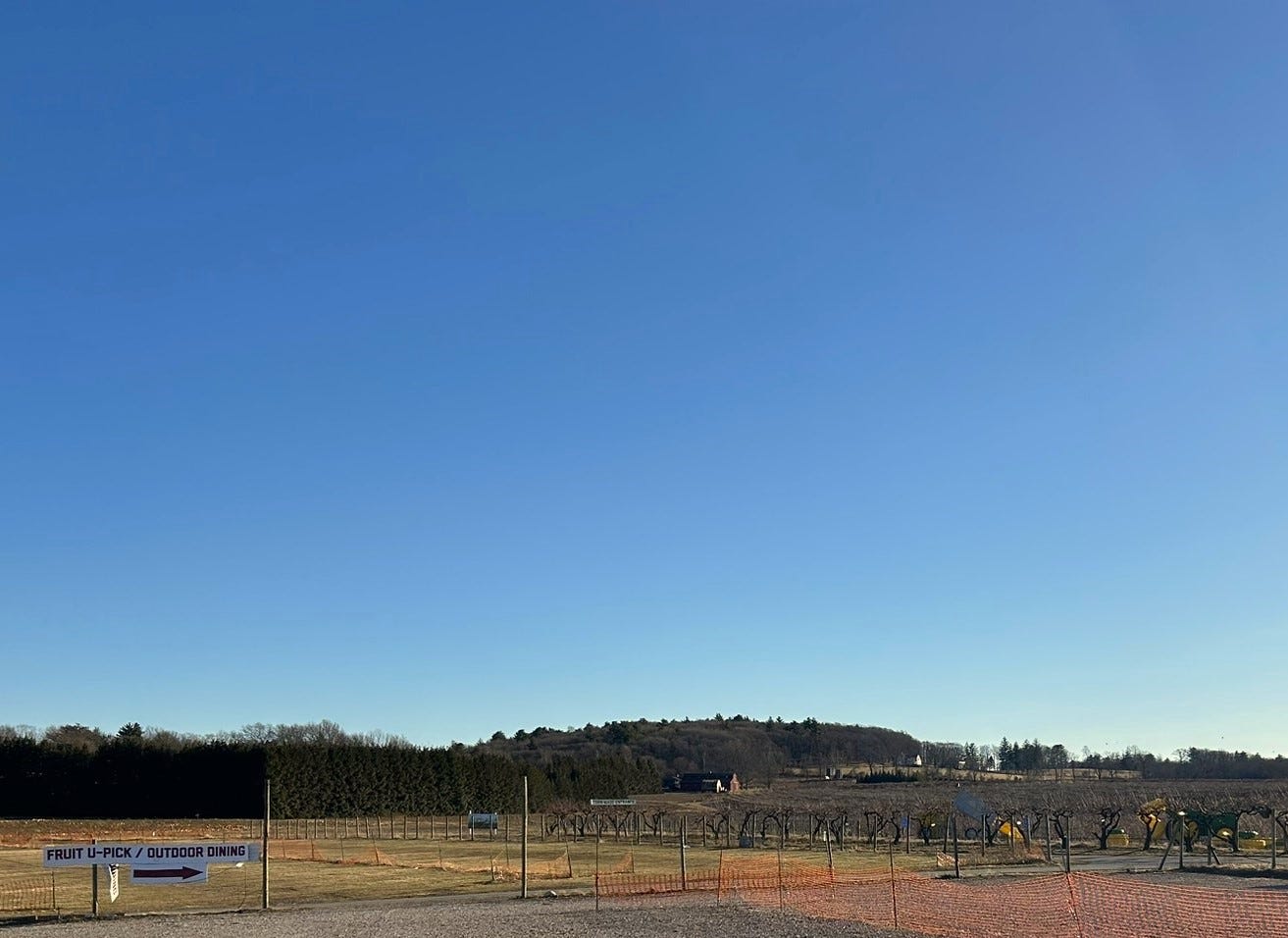
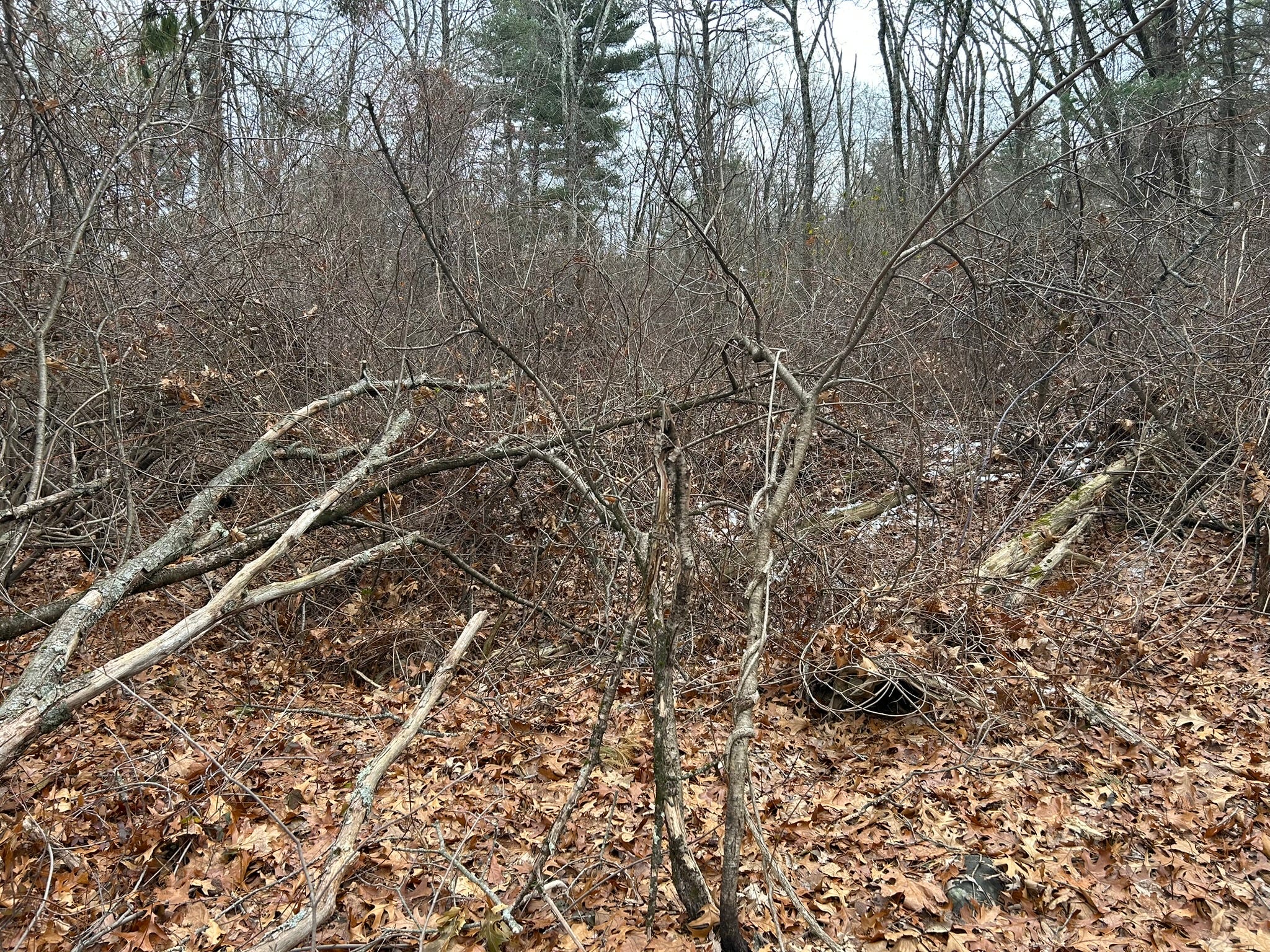
Beneath the familiar story of farms and estates lies an older, more fragile one, marked not by grand monuments but by subtle traces easily missed unless you know where to look for them. On the Natick side, a few hundred yards east of the parking lot, a tangle of scrub brush hides one of the hill’s more poignant landmarks. You’ll have to look carefully to find it, but a slight depression in the ground reveals that a small house once stood here.
In 1897, local historian Frank Smith wrote:
The Pegan tribe owned and occupied Pegan Hill and the surrounding country. Some of the last members of this tribe built a house which was located on the Natick side of the boundary line, the cellar of which is still traceable. Thomas Pegan was the last owner of this house.1
The idea that the Pegans were a tribe is a misconception dating back to the 18th Century. Cheryll Toney Holley, a researcher specializing in Indigenous peoples of New England and a Pegan descendant, tells us that the Pegans weren’t a tribe nor even a family group. They were a community and a part of the Nipmuc tribe whose ancestral homeland encompassed much of central Massachusetts and northeastern Connecticut.2 Thomas Pegan was one of the “Praying Indians” who embraced Reverend John Eliot’s vision of a Native American population practicing Christianity, farming the land, and living as the English thought proper.
Eliot was an interesting man if we can look beyond the inherent paternalism of his time. An English clergyman, Cambridge graduate, pastor of the First Church in Roxbury, and founder of the Roxbury Latin School, he believed that the conversion and assimilation of the Native Americans (thought to be descendants of the Lost Tribes of Israel) were not merely desirable goals but moral imperatives. Learning their spoken language from an enslaved Pequot captured during the Pequot War of 1637-1638, he first preached to the Massachusett tribe in what is today Newton.
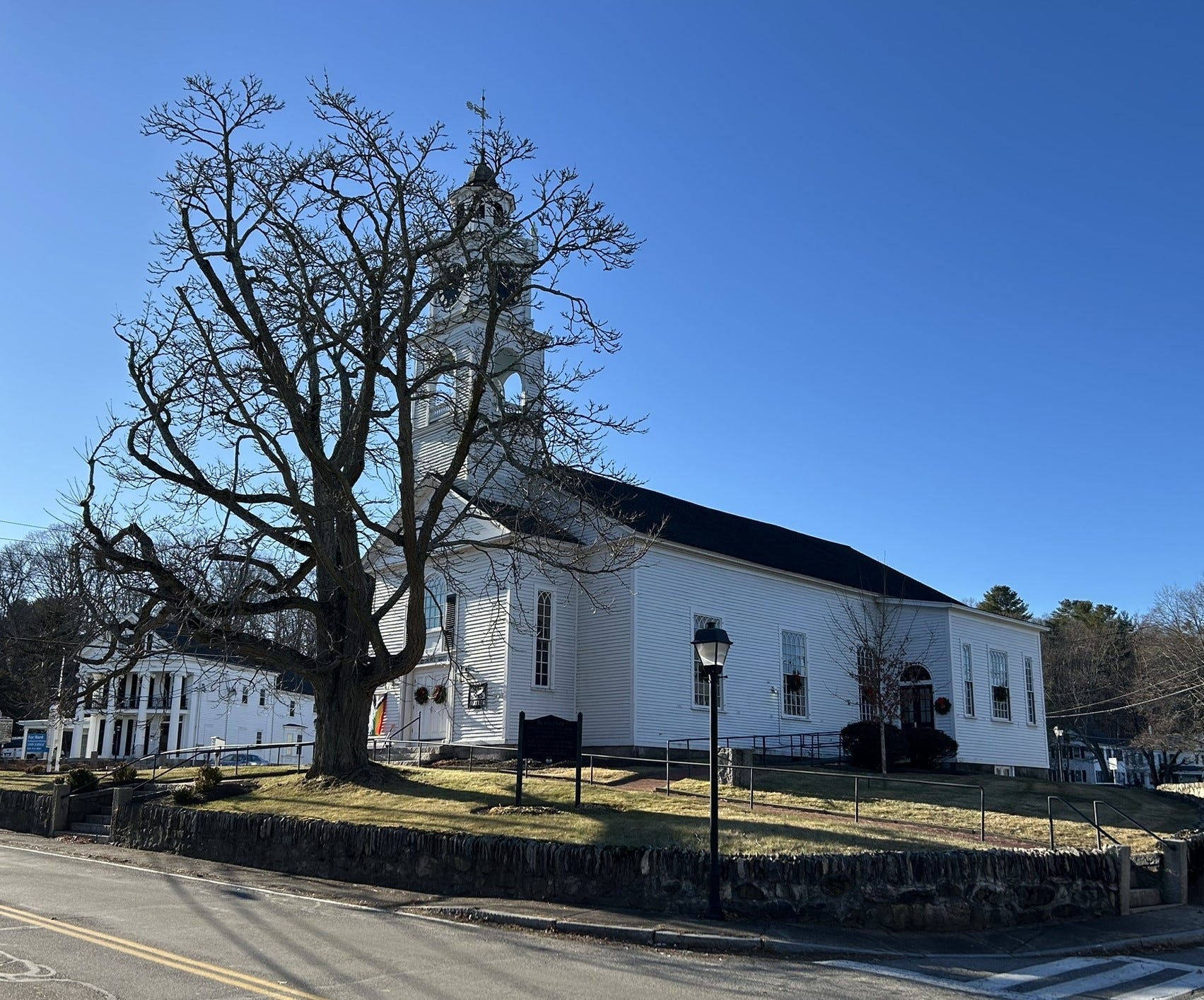
In 1651, the Massachusetts General Court granted Eliot’s converts, mostly members of the Massachusett and Nipmuc tribes, 2,000 acres in a place they named Natick, meaning “a place of hills”. The initial grant would later be expanded to 6,000 acres. About 150 of them settled here, forming a self-governing community with a footbridge over the Charles River and a palisaded meeting house and school on the site of the present Eliot Church.
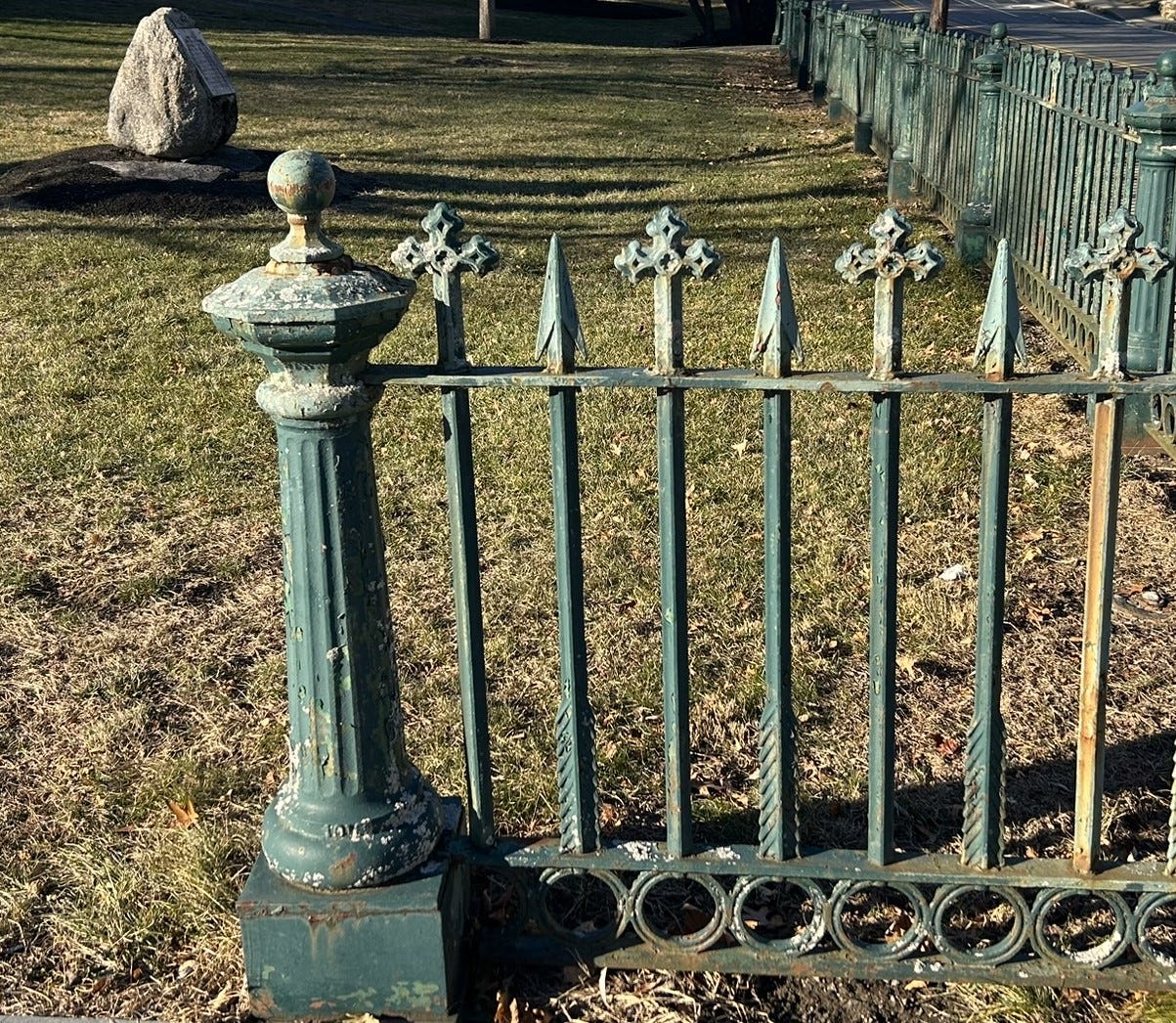
The land surrounding the Bacon Free Library (built in 1880) was the Praying Indians’ burial ground, now enclosed by a fence that pays homage to both cultures through alternating iron arrows and crosses.
A Community Caught Between Cultures
Eliot went on to establish 14 Praying Indian villages ranging from Cape Cod to central Massachusetts and northeastern Connecticut. These communities would prosper for about 25 years. Aided by a Nipmuc named Wowaus, or, to the English, James Printer, Eliot published the first translation of the Bible into Algonquian.
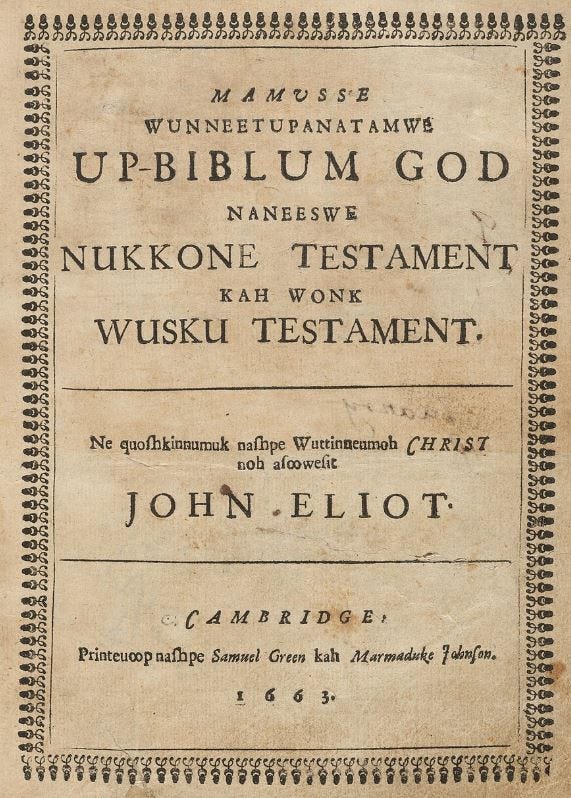
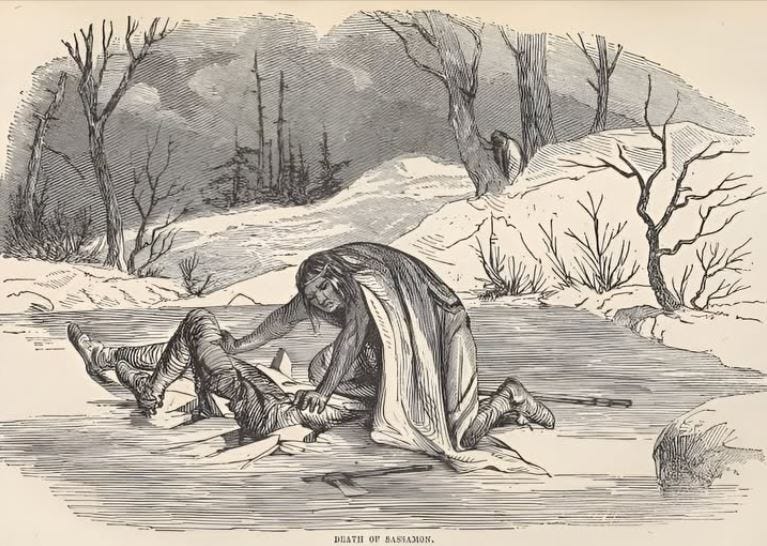
Another Praying Indian, John Sassamon, attended Harvard College and worked as a translator and scribe for the Wampanoag sachem Metacom, known to the English as King Philip. As converts, however, they were always in a tenuous position - separated from their own culture, yet never fully accepted by their English mentors.
Ultimately, Eliot’s vision of peaceful assimilation was shattered by the cultural cataclysm known as King Philip’s War. Many of the Praying Indians sided with the English against their own people. In late 1674, having learned of Metacom’s plan to attack the English settlements, Sassamon warned Josiah Winslow, the Governor of Plymouth Colony. Dismissive and distrustful, Winslow ignored the warning, and in January of 1675, Sassamon’s body was found at Assawompset Pond in Middleboro. Believing that he had been murdered for his betrayal of Metacom, an English jury convicted and executed three Wampanoag men despite little evidence of their guilt. On June 20th, 1675, Metacom attacked the settlement at Pokanoket Neck. The war that followed was the deadliest conflict on a per capita basis in American history.
In the fall of 1675, the English destroyed ten of the Praying Indian villages and forcibly interned their inhabitants on Deer and Long Islands in Boston Harbor. Utterly unequipped for the winter, more than half of them died of exposure and starvation. Others were sold into slavery and sent to the Caribbean. Perhaps ironically, the war that began with the death of a Praying Indian ended with Metacom’s death in August of 1676 at the hands of another - shot by John Alderman, a Wompanoag serving with Benjamin Church near Mount Hope, Rhode Island.
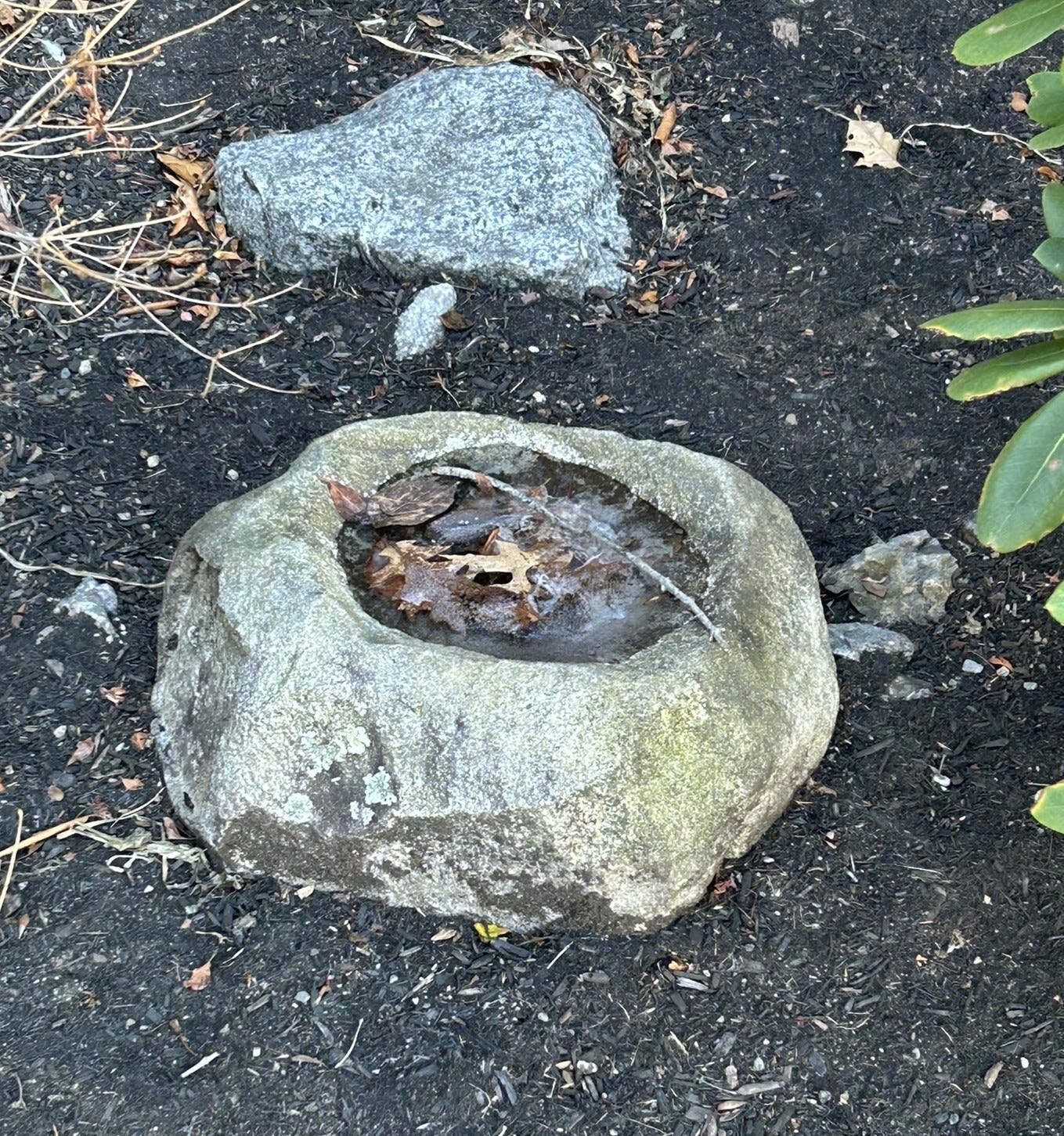
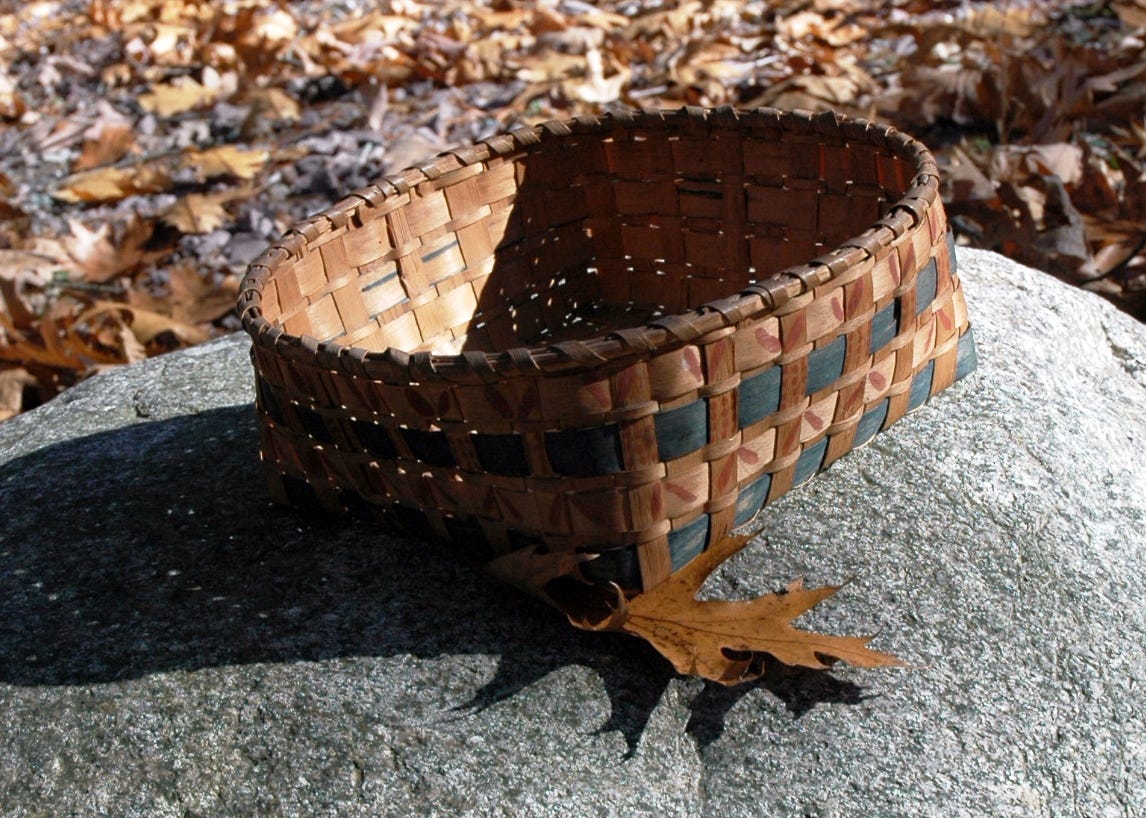
John Eliot died in 1690, having surrendered his pulpit to a Nipmuc minister, Reverend Daniel Takawambait, in 1683. Takawambait presided over a dwindling and increasingly impoverished congregation until his death in 1716. According to Frank Smith, “a small remnant of Natick Indians remained as late as 1835, who roamed over town, selling baskets, and begging, wherever they went, a glass of cider.” 3
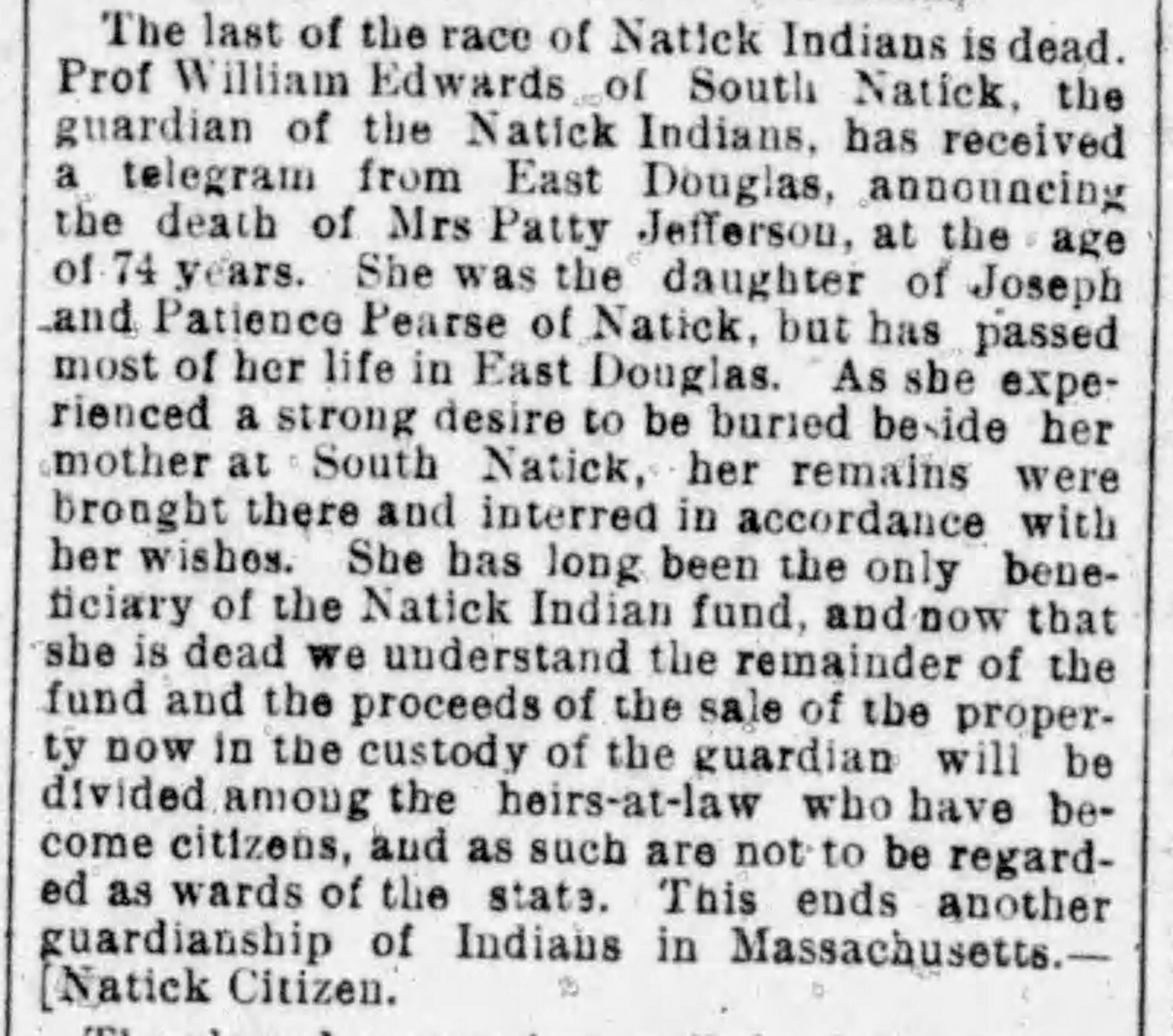
A report prepared for the Massachusetts Senate by John Milton Earle in 1859 identified only one Native American family, the Blodgetts, still living in Natick, and another, the Jephersons, who had relocated to Dudley. As late as 1866, the Commonwealth’s Natick Indian Fund was making distributions to three unidentified residents of South Natick, presumably the Blodgetts. On January 20, 1887, Patty Jepherson, the last recipient of the Natick Indian Fund, died at her home in Uxbridge, Massachusetts.
By 1883, the Algonkian language of Eliot’s Bible was considered extinct, with only one living person able to read it, James Hammond Trumbull of Hartford, Connecticut. A distinguished natural historian and scholar of Native American languages, Trumbull’s Natick Dictionary was published by the Smithsonian Institution’s Bureau of American Ethnology in 1903. In recent years, however, both Eliot’s Bible and Trumbull’s dictionary have attracted renewed interest among Native Americans seeking to revive their language. In 1993, Jessie Little Doe Baird established the Wampanoag Language Reclamation Project, for which she was awarded a MacArthur Genius Grant in 2010. The Natick Praying Indian community has endured as well, its membership welcoming descendants of the original inhabitants and other Native Americans, and meeting annually at Natick’s Cochituate State Park.
The fate of the Pegans of Pegan Hill is shrouded in the mists of a marginalized past. Thomas Pegan, Jr., was dead by 1761 when Samuel Morse, the administrator of his estate, sold four acres of his land in Natick to Peter Rice of Framingham. They didn’t disappear - the name occurs frequently in the records of Worcester County communities, including Webster, Dudley, and Uxbridge. In all probability, as the Praying Indian community in Natick dwindled away, the Pegans gravitated back to their ancestral homelands and went on with their lives, leaving only their name on a small but still beautiful hill straddling Natick and Dover.
Frank Smith, A History of Dover, Massachusetts as a Precinct, Parish, District, and Town (Dover: Published by the Town, 1897). 9
Cheryll Toney Holley, https://cherylltoneyholley.com/2024/05/28/who-is-a-pegan/
Frank Smith, A History of Dover, Massachusetts as a Precinct, Parish, District, and Town (Dover: Published by the Town, 1897). 10
Really interesting, Elisha!
What a compelling essay Elisha. Thank you